
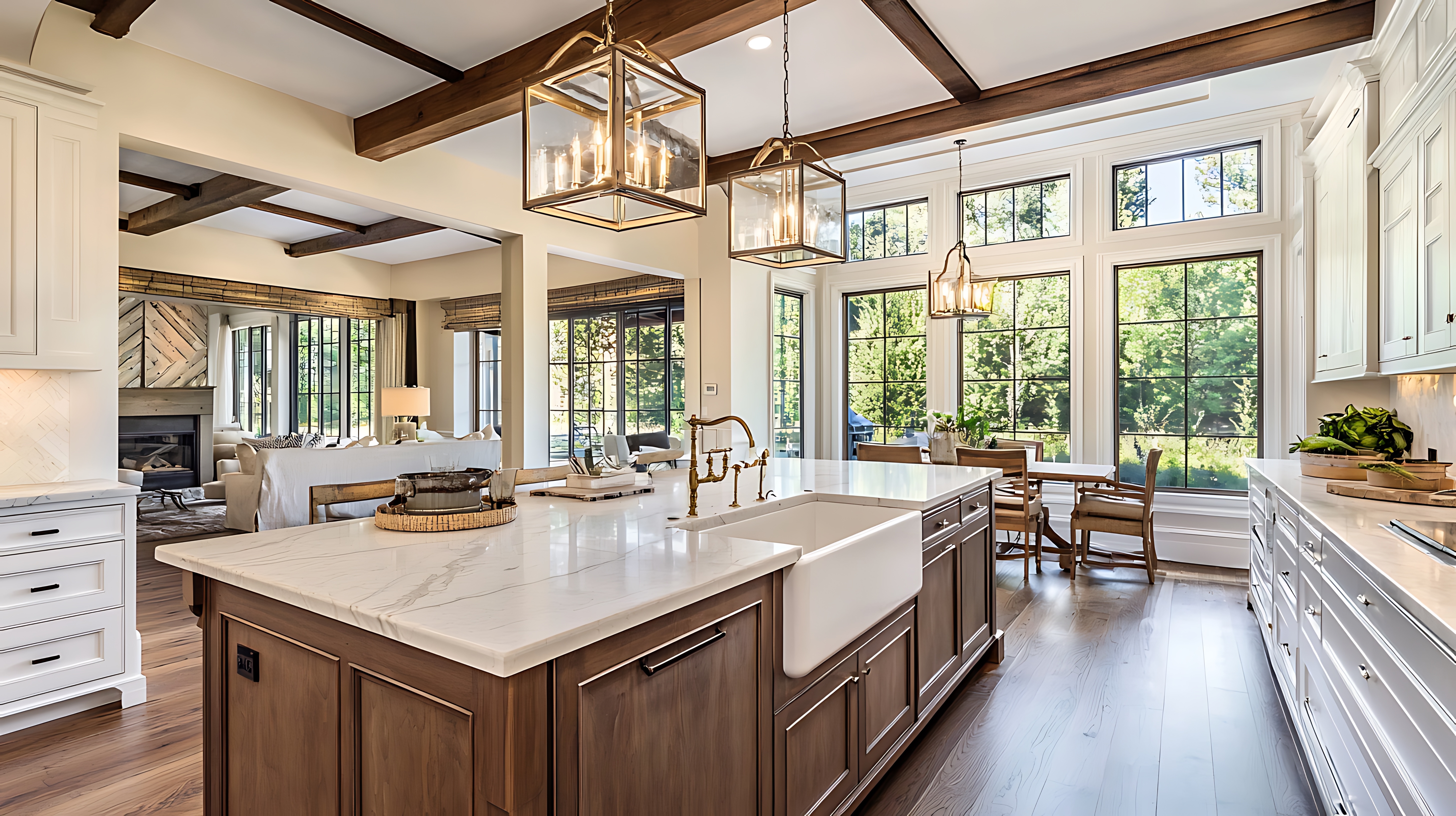
Kitchen color decisions can feel deceptively simple. A homeowner may begin with “white,” “blue,” or “wood,” only to discover that every color has dozens of undertones and finish options. In Chicago kitchens, the right palette also needs to work with changing daylight, established architectural details, and the size of the room.
Current cabinet palettes are moving toward more warmth, depth, and individuality. Bright white has not disappeared, but it now shares the spotlight with creamy neutrals, earthy greens, natural wood tones, and carefully placed dark colors.
Builders Cabinet offers custom and semi-custom cabinetry for Chicago-area projects, including locally manufactured Orchard Hill Cabinetry. Available Orchard Hill finish categories include paint, stain, supermatte, acrylic, textured surfaces, and melamine.
Warm White Creates a Clean but Comfortable Foundation
White remains one of the most adaptable kitchen cabinet colors. It can make a compact room look more open and provides a neutral background for countertops, backsplashes, lighting, and decorative accessories.
The key is selecting the appropriate white. A crisp white may look attractive in a bright showroom but feel cold in a north-facing Chicago kitchen. Warm whites with subtle cream, beige, or gray undertones often create a more comfortable result.
Warm white cabinets coordinate well with:
Natural oak flooring
Light or medium-toned quartz
Marble-inspired surfaces
Brushed brass hardware
Handmade-look tile
Black or bronze accents
For added dimension, homeowners can use a slightly deeper neutral on the island while keeping the perimeter cabinetry light.
Greige and Mushroom Offer a Softer Neutral
Greige blends gray and beige, while mushroom shades usually have a warmer brown or taupe undertone. Both colors are useful when white feels too bright and traditional gray feels too cool.
These tones work especially well in transitional kitchens because they can support both classic and contemporary features. A greige cabinet door can feel refined with polished hardware, or more relaxed with natural wood and textured tile.
In smaller kitchens, a pale greige maintains an open appearance. In larger spaces, a deeper mushroom shade can add substance without becoming as dominant as navy or black.
Green Cabinets Connect the Kitchen to Natural Materials
Muted green continues to appeal to homeowners who want color without an overly bold result. Sage, olive, eucalyptus, and gray-green shades feel grounded and can pair naturally with wood, stone, and warm metals.
Green cabinetry can be introduced in several ways:
Across all base and wall cabinets
On an island only
Inside a glass-front cabinet
On a pantry or beverage station
As part of a two-tone design
A soft sage works well in a smaller kitchen because it adds personality while remaining relatively light. Olive and forest-inspired shades create more drama and tend to work best in rooms with ample light or pale surrounding surfaces.
Blue Remains a Reliable Accent Color
Navy has become a familiar cabinet color because it feels distinctive without being difficult to coordinate. It can support traditional door styles, streamlined contemporary cabinets, or transitional designs.
For a less formal appearance, dusty blue and blue-gray provide a softer alternative. These colors can be particularly effective on an island surrounded by warm white cabinets.
Blue cabinetry pairs well with:
White or lightly veined counters
Warm metallic hardware
Natural wood accents
Pale gray tile
Simple white walls
Homeowners should examine blue samples in the actual room. Some blues appear much brighter in direct sunlight and nearly black under warm evening lighting.
Natural Wood Tones Add Warmth
Wood can function as a color within the overall kitchen palette. A light or medium stain introduces variation and warmth that cannot be duplicated by flat paint.
Natural-looking stains are useful in Chicago homes with original trim, hardwood flooring, exposed brick, or other architectural materials worth preserving. Rather than matching every wood tone exactly, aim for finishes that share compatible undertones.
A stained island is one of the easiest ways to introduce wood into a painted kitchen. Open shelves, tall pantry cabinets, or a designated coffee area can serve the same purpose.
Orchard Hill Cabinetry offers both painted and stained finish categories, making it possible to explore mixed-finish combinations within a coordinated cabinet design.
Charcoal and Black Work Best with Balance
Charcoal and black cabinets can give a kitchen a tailored, architectural appearance. They are especially effective in spacious rooms, loft-inspired interiors, and kitchens where the cabinetry is intended to resemble built-in furniture.
However, dark colors absorb light. In a narrow galley kitchen or a room with limited windows, an all-black design may feel enclosed. A selective application can deliver the same impact without overwhelming the room.
Consider using dark cabinetry for:
A kitchen island
Lower cabinets only
A pantry wall
A bar area
A framed appliance section
Light countertops and a well-planned lighting scheme can keep the palette balanced.
How to Build a Cohesive Cabinet Color Palette
A successful palette typically contains a dominant finish, a supporting material, and one or two accents. Too many unrelated colors can make a kitchen feel fragmented.
Before making a final selection:
Identify materials that will remain, such as flooring or exposed brick.
Choose the primary cabinet color.
Select the countertop and backsplash together.
Decide whether a second cabinet finish is necessary.
Evaluate hardware and lighting finishes.
View all samples in the home at different times of day.
The Builders Cabinet showrooms in Chicago and Lombard allow homeowners to see cabinetry and finish samples in person while discussing design options with experienced team members.
A thoughtful kitchen palette should feel connected to the home rather than copied from a passing trend. Start with the room’s light, architecture, and permanent materials, then select cabinet colors that bring those elements together.

