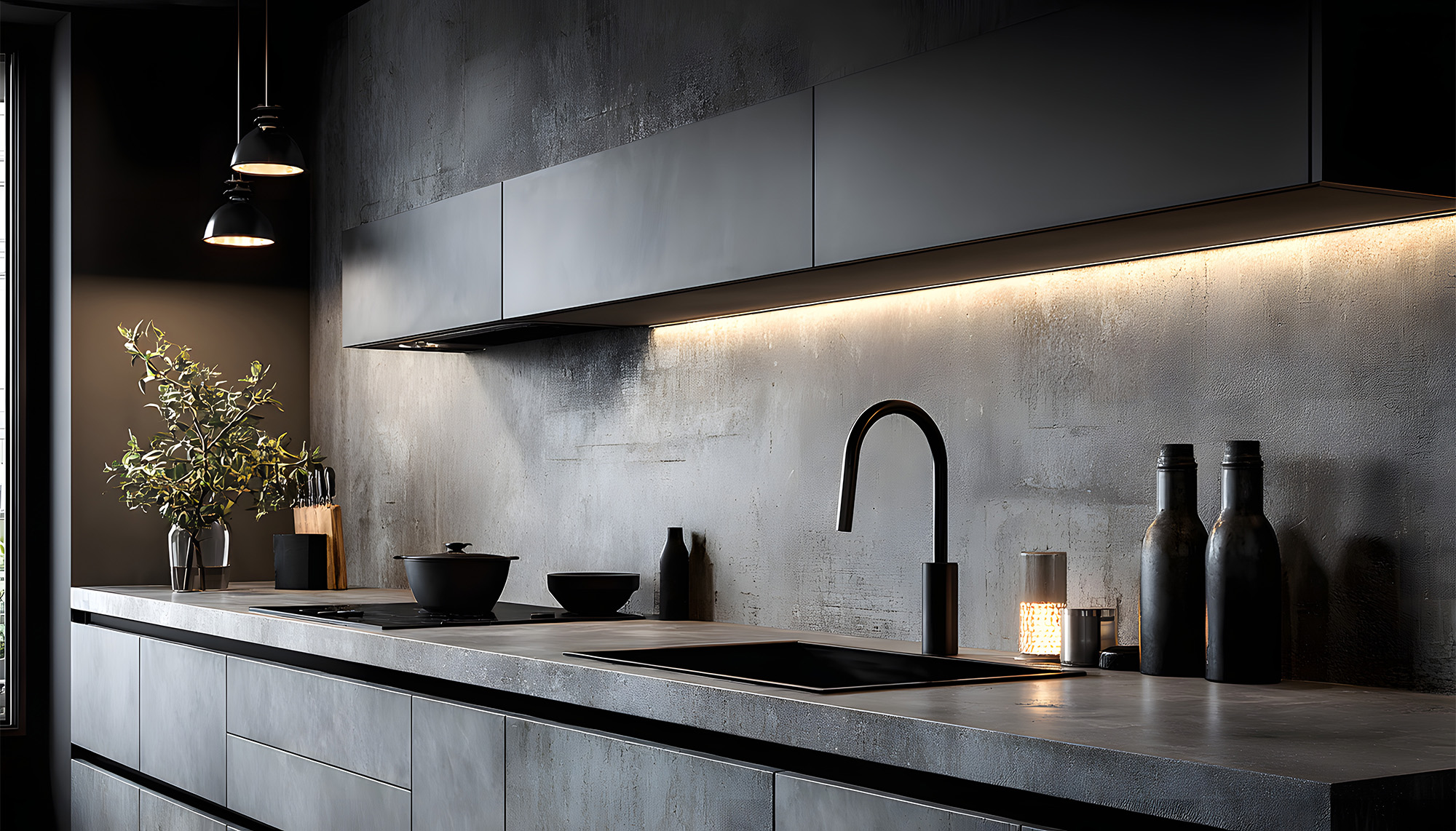
When planning a home remodel, the decisions go far beyond wood species and paint colors. One of the most critical structural choices you will make involves selecting the core construction style of your custom cabinets. Cabinet engineering falls into two primary categories: framed and frameless. This structural choice impacts not only the overall visual design of your space but also how you interact with your storage on a daily basis.
Traditional American Craftsmanship: Framed Cabinets
Framed cabinetry is the classic American standard of cabinet manufacturing. In this construction style, a solid wood frame—resembling a flat picture frame—is securely attached to the front face of the cabinet box. The cabinet doors and drawer fronts then attach to this face frame.
Framed cabinets offer immense structural stability because the wood frame reinforces the entire box structure. This style provides a highly versatile canvas for design. Depending on your preference, you can choose partial overlay doors (where some of the frame is visible), full overlay doors (where the doors cover the frame almost entirely), or inset doors, where the doors sit perfectly flush inside the frame for a clean, heirloom-furniture appearance.
Modern Innovation: Frameless Cabinets
Often referred to as European-style cabinetry, frameless cabinets eliminate the front face frame entirely. Instead, the cabinet doors attach directly to the interior sides of the thick cabinet box. This style relies on the structural integrity of the side panels themselves, which are built thicker than those found in framed options.
The defining characteristic of frameless cabinetry is a sleek, continuous, and flush look. Because there is no overlapping frame, the gaps between doors and drawer fronts are minimal, often just fractions of an inch. This makes frameless cabinets the absolute go-to choice for contemporary, minimalist, and transitional interior designs.
Comparing Interior Storage and Accessibility
The absence or presence of a face frame significantly alters how much usable space you have inside the cabinet. Framed cabinets have a center stile (a vertical piece of wood) running down the middle of double-door cabinets, which can occasionally obstruct large platters or wide storage containers. Furthermore, the frame slightly narrows the opening for drawers.
Frameless cabinets, on the other hand, offer full access to the interior. Because there is no lip or frame overhang, drawers can be wider, and items can slide straight in without catching on a wooden edge. For homeowners trying to maximize storage capacity in a smaller footprint, the frameless style offers a noticeable functional advantage.
Choosing the Right Style for Your Remodel
Your choice ultimately depends on the architectural language of your home and your personal storage goals. If you love timeless, traditional details, intricate crown moldings, or the classic look of inset doors, framed cabinetry is your natural match. If you lean toward crisp lines, modern minimalism, and maximum internal drawer space, frameless cabinets will serve you best.
Ultimately, both styles offer incredible durability and beauty when built with custom precision.
Your choice will depend heavily on the architectural style of your home and how you plan to use your space.
If you are ready to explore high-quality custom cabinetry designed specifically for your layout, reach out to the design team at Builders Cabinet today to start planning your perfect space.