
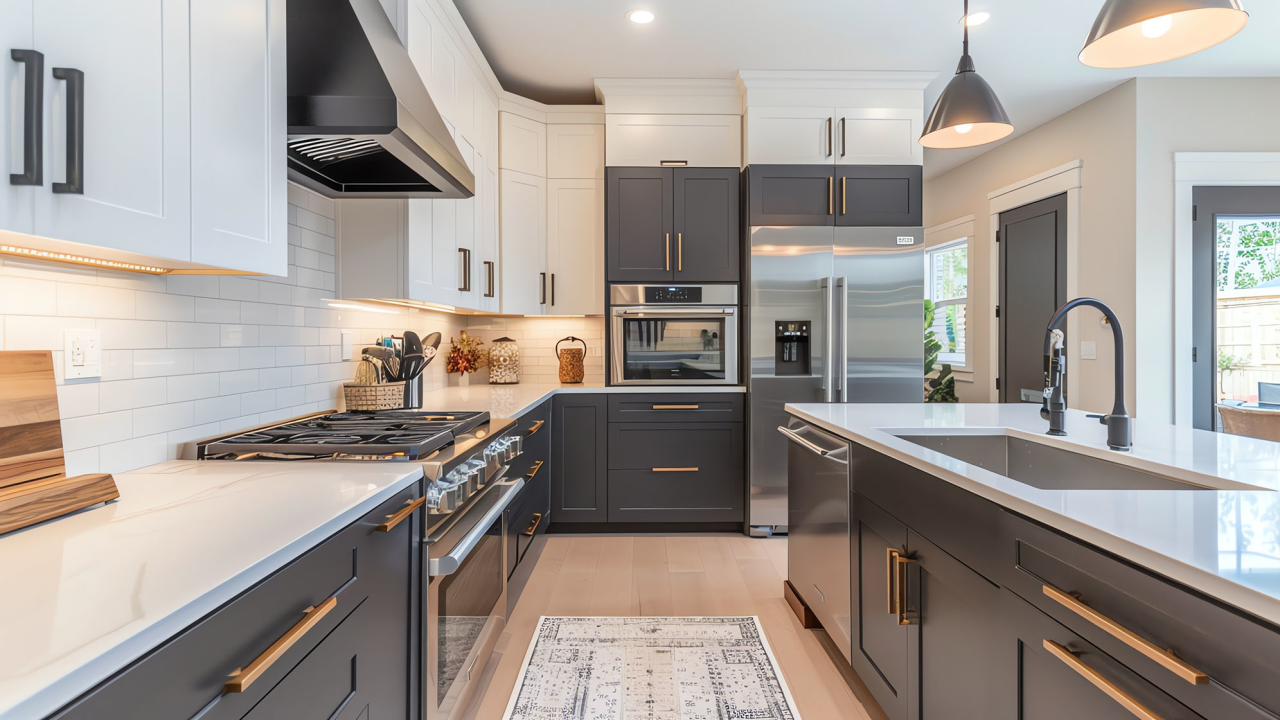
Deciding on a cabinet design style is one of the most critical choices in any kitchen renovation project. In a city like Chicago—where architectural styles range from turn-of-the-century Greystones and Victorian Victorians to mid-century ranches and industrial timber lofts—your choice of cabinets should harmonize with your home’s character while serving your lifestyle needs.
Understanding the core differences between modern and classic cabinet design will help you select the style that best fits your space and long-term vision.
Understanding the Modern Cabinet Aesthetic
Modern cabinetry focuses on clean lines, simple door profiles, and minimalist appeal. This style emphasizes flat-panel (slab) cabinet doors, hidden hardware, and smooth, continuous surfaces.
Key characteristics of modern kitchen cabinets include:
Frameless Construction: Often referred to as European-style cabinetry, frameless construction maximizes internal drawer space and offers sleek, tight reveal lines between doors.
High-Contrast or Monochromatic Palettes: Modern kitchens frequently feature crisp whites, deep grays, black matte finishes, or natural wood grains like rift-sawn white oak.
Integrated Appliances: Panel-ready cabinetry covers dishwashers and refrigerators to maintain unbroken horizontal and vertical lines across the kitchen walls.
Modern cabinetry is especially well-suited for Chicago lofts, modern condo towers, and minimalist new-construction homes where open space and light take center stage.
The Timeless Appeal of Classic and Transitional Cabinets
Classic cabinet design honors traditional woodworking detail, warmth, and symmetry. It encompasses traditional raised-panel door styles as well as widely popular transitional designs, like classic Shaker doors, that bridge traditional and contemporary aesthetics.
Key characteristics of classic and transitional cabinetry include:
Framed Construction: Traditional American-built cabinets feature face frames that provide distinct structural boundaries and classic dimensional lines around doors and drawers.
Detailed Door Profiles: Beveled edges, inset door panels, crown molding, and decorative end panels add architectural interest to the space.
Warm Stains and Soft Paints: Classic styles often highlight rich stain colors or soft neutral paint tones like antique white, soft gray, and warm taupe.
Classic cabinetry complements traditional single-family homes across Chicagoland, blending effortlessly into historic neighborhoods while providing a welcoming atmosphere.
Matching Your Cabinetry to Chicago’s Architecture
When deciding between modern and classic styles, consider the following factors:
Home Architecture: Look at the trim, molding, and window casings throughout your home. A seamless transition from the living room to the kitchen creates design harmony.
Maintenance Preferences: Flat-panel modern doors are easy to wipe down, while detailed classic doors require slightly more care around trim lines.
Resale Considerations: Neutral transitional designs (such as simple Shaker cabinets in versatile finishes) offer broad appeal if you plan to sell your home in the future.
Working with an experienced local showroom team—such as the designers at Builders Cabinet in Chicago and Lombard—allows you to compare door samples, finish textures, and hardware options in person before making your final selection.

