
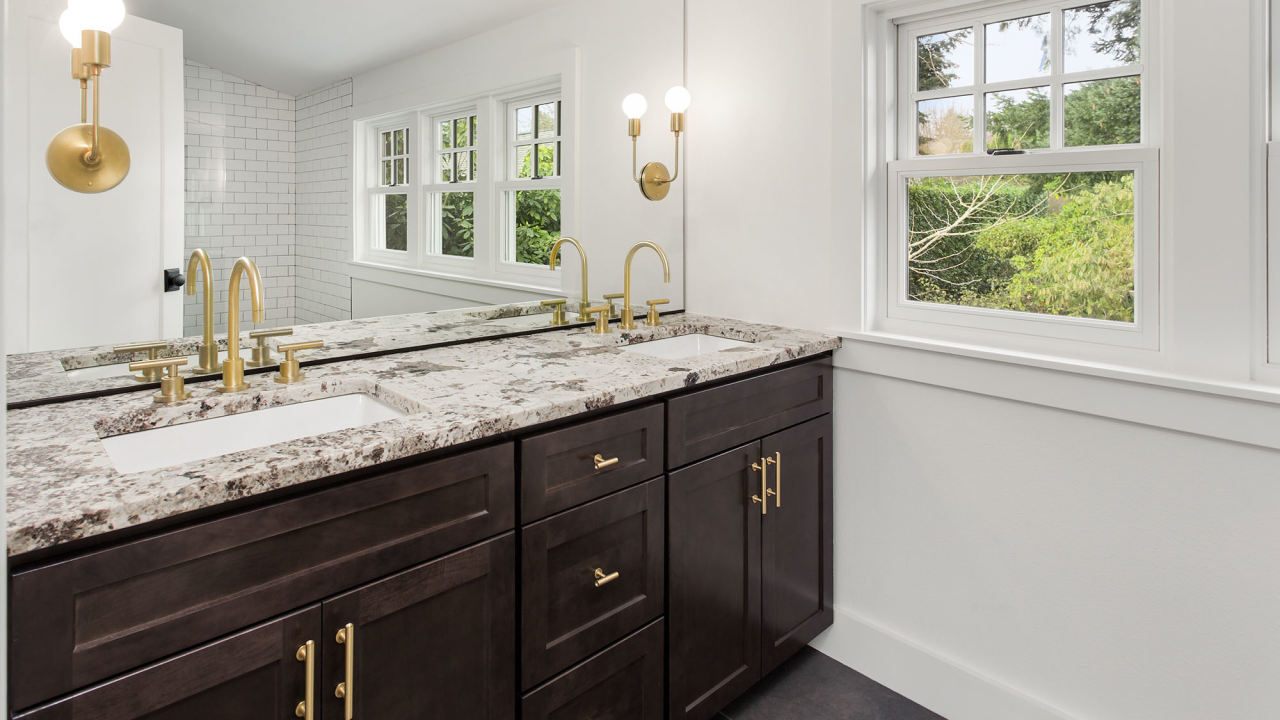
Chicago winters present a tough test for interior home materials. Outside, temperatures drop below freezing, while indoors, heating systems create dry ambient air. Meanwhile, bathrooms experience short bursts of intense humidity during hot showers. This constant shift between dry room air and hot steam places severe stress on bathroom cabinetry.
How Moisture and Temperature Shifts Damage Standard Cabinets
Understanding how moisture affects low-grade cabinetry shows why choosing humidity-resistant materials matters for Chicago homes. Standard builder-grade cabinets often use unsealed particleboard or medium-density fiberboard (MDF) core panels covered with thin foil wraps.
When warm shower steam penetrates tiny cracks in cabinet seams or around hinge attachments, the particleboard core absorbs the moisture and swells. Over time, this leads to bubbling surfaces, peeling edges, sagging drawer bottoms, and doors that stick against cabinet frames. In severe cases, trapped moisture damages internal cabinet structures, leading to premature replacement.
Selecting Moisture-Resistant Core Materials
Building a bathroom cabinet that withstands severe Chicago winters starts with choosing the right core box construction.
Marine-Grade or Furniture-Grade Plywood: Unlike particleboard, high-grade plywood is made from crisscrossed layers of solid wood glued together under high pressure with water-resistant adhesives. This structure prevents swelling, warping, and bowing under seasonal humidity shifts.
Solid Hardwood Frames: Solid maple, oak, or alder face frames offer a sturdy foundation that holds door hinges securely in place, even in high-moisture environments.
Choosing plywood box construction ensures your bathroom vanity maintains its strength and structural integrity over time.
Protective Factory Finishes and Edge Banding
The outer protective layer of your cabinetry serves as its primary defense against water exposure. Mass-market cabinets painted on-site often leave unsealed edges underneath cabinet boxes where steam easily collects.
Factory-applied conversion varnish finishes provide a tough layer protection against moisture. Applied in temperature-controlled factory environments, these specialized topcoats seal all wood surfaces—including top edges and door sides—against steam and water drops. Modern edge-banding techniques also lock out moisture, preventing peeling along drawer fronts and door edges.
Essential Installation Practices for Chicago Homes
Proper installation is just as critical as material selection, particularly in older Chicago homes or on exterior-facing walls that get cold during winter months.
Professional cabinet installers use key installation techniques to protect your investment:
Air Gap Spacers: Leaving a micro-gap between exterior walls and back cabinet panels improves airflow and stops condensation buildup.
Silicone Barrier Seals: Sealing seams between vanity tops, backsplashes, and cabinet edges prevents water from running down cabinet backs.
Protected Base Risers: Elevating cabinet boxes slightly off bathroom floors prevents water from soaking into wood bases during cleaning or minor leaks.
Long-Term Value for Your Home Renovation
Investing in moisture-resistant bathroom cabinetry built to handle local weather conditions saves money on repairs and early replacements. High-quality vanities maintain their smooth drawer action, tight door alignment, and crisp surface finishes year after year.
Partnering with local cabinetry experts who understand Midwest climate demands ensures your bathroom renovation stays durable, clean, and beautiful through every Chicago winter.

