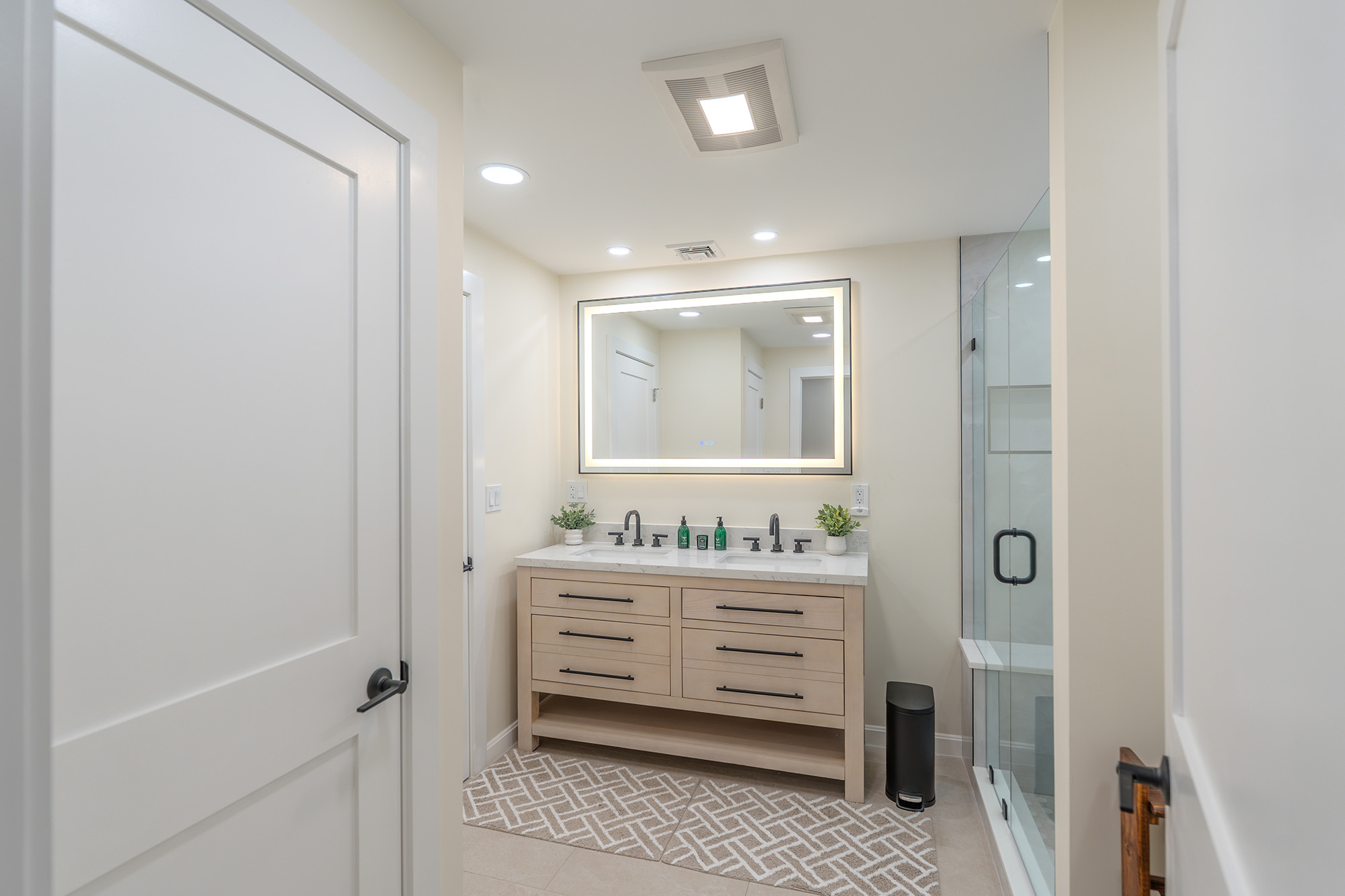
Designing a compact bathroom, guest bath, or powder room forces you to maximize every square inch without sacrificing aesthetic style. Because the vanity is typically the largest furniture piece in the room, the specific style you select will largely dictate whether the space feels open and airy or cramped and restrictive. When remodeling a small bathroom, the design decision usually comes down to two major choices: floating or freestanding vanities.
Floating Vanities for a Modern, Airy Aesthetic
Floating vanities are securely anchored directly to the wall, leaving the floor underneath completely exposed. This design creates a powerful visual illusion: because your eyes can trace the continuous flooring all the way to the baseboard, the entire bathroom instantly feels larger and more expansive than it actually is.
Beyond the optical benefits, floating vanities introduce a clean, ultra-modern, and minimalist vibe to the home. They also make cleaning the bathroom floor incredibly easy, as there are no awkward corners, legs, or toe-kicks to sweep around. The open space beneath can also be utilized for storing neatly rolled towels in decorative baskets, maintaining a highly organized and sophisticated appearance.
Freestanding Vanities for Timeless, Substantial Storage
Freestanding vanities rest firmly on the floor, supported either by solid decorative legs or a traditional wrapped toe-kick base. This style is highly favored for traditional, transitional, and farmhouse interior designs because it mimics the look of high-end, freestanding furniture.
The primary advantage of a freestanding vanity in a small bathroom is raw storage capacity. Because the cabinetry extends all the way to the floor, you gain maximum internal cabinet volume. This extra vertical space allows for deeper drawers and larger cabinet bays, making it easier to store tall bottles, cleaning supplies, and stacks of extra bath linens.
Structural and Installation Considerations
When making your decision, practical construction requirements must also be considered. Floating vanities require sturdy structural support behind the drywall to safely bear the weight of the cabinetry and heavy stone countertops. Additionally, because the underside of the vanity is visible, plumbing lines must be neatly routed inside the wall or finished in polished, visually appealing metals. Freestanding vanities are far more forgiving during installation, easily concealing standard floor or wall plumbing behind their sturdy base.
Choosing Your Ideal Design Style
If your priority is making a tiny powder room look as large, sleek, and contemporary as possible, a floating vanity is an exceptional choice. If your small bathroom serves as a heavily used daily washroom where maximizing internal storage space is your main goal, a freestanding vanity will deliver the utility you need.
Both options bring distinct functional advantages and visual impact to a compact bathroom remodel.
The right choice depends on whether you value maximizing raw storage capacity or creating the illusion of a larger, more open room.
Reach out to Builders Cabinet today to explore our custom bathroom vanity collections and find the absolute perfect fit for your home.